

Selecting High-Current Anti-Spark Connector [QS Series Antispark connector] for Swappable Payload Drones | Lightweight, low-contact-resistance, high-vibration tolerance.
2026-06-04 09:54:26
Click:
“
Swappable payload drones — unmanned aerial vehicles designed to carry interchang
”
Swappable payload drones — unmanned aerial vehicles designed to carry interchangeable mission loads such as sensors, cameras, cargo pods, or spraying systems — are transforming industries from agriculture and logistics to public safety and infrastructure inspection. These drones often rely on a single high‑current power interface that must be mated and unmated repeatedly during payload swaps, sometimes in the field, under vibration, and with tight turnaround times.
Unlike fixed battery connectors, a swappable payload connector faces a unique set of challenges: it must be lightweight (every gram counts in flight), maintain ultra‑low contact resistance to minimize power loss and heating, tolerate continuous vibration without intermittent disconnection, and resist arcing during live swaps when the drone’s onboard capacitors are still charged.
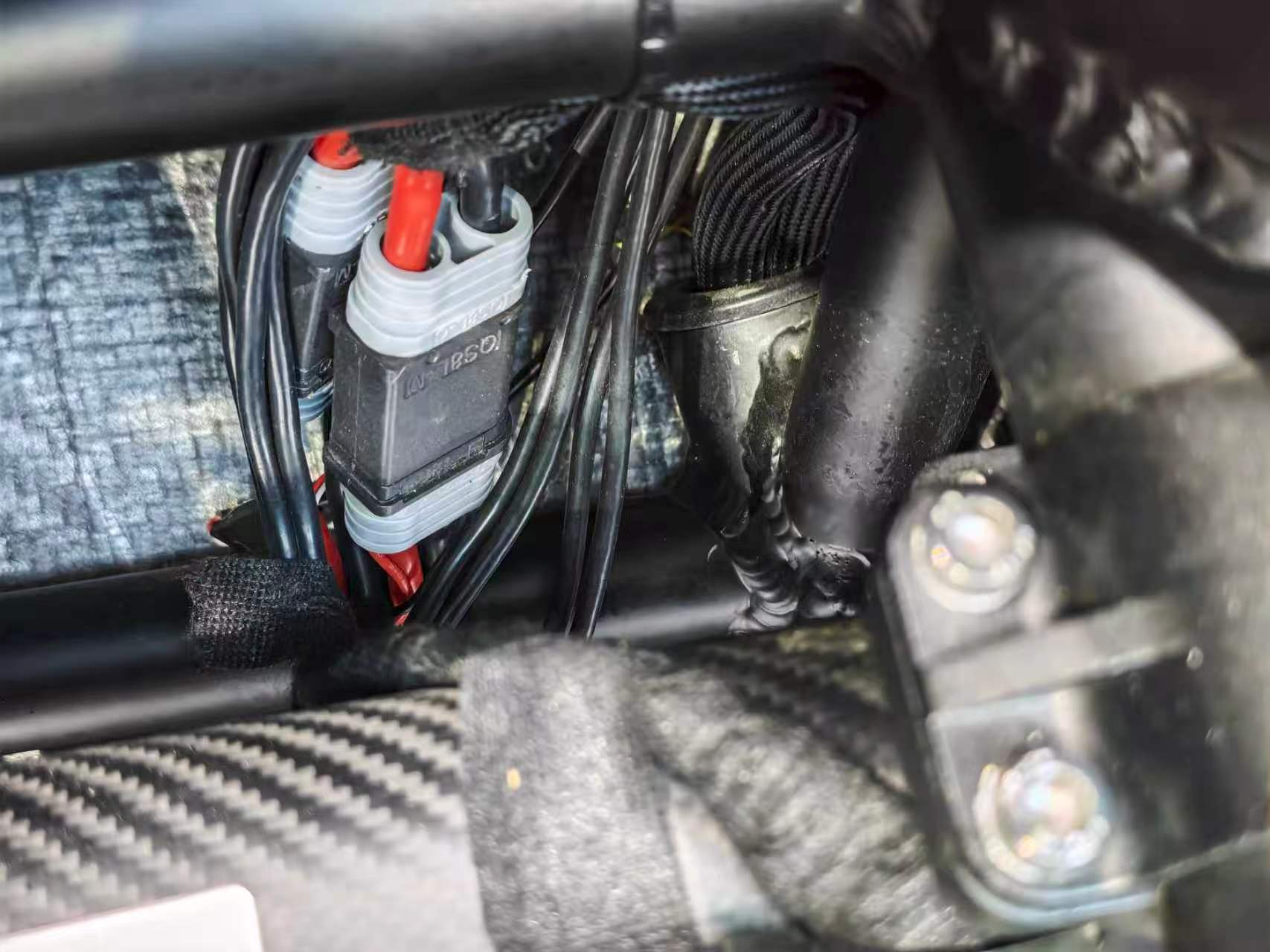
The QS Series Anti‑Spark Connector from Youweic Technology meets all these demands. With models ranging from 110A to 300A at 500V DC, a maximum contact resistance of 0.51 mΩ, gold‑plated copper contacts, and a robust PA66 UL94 V‑0 housing rated for -20°C to 120°C, the QS Series offers the ideal combination of low weight, stable electrical performance, and high vibration resistance for swappable payload drones.
This article explains the specific challenges of drone payload connectors, how the QS Series addresses them, and how to select the right model for your unmanned system.
Part I: The Problem — What Makes Swappable Payload Connectors So Demanding
1.1 Frequent Live Swapping Under Field Conditions
A drone operating with swappable payloads may change its mission load several times per flight session. Each swap involves:
- Unmating the old payload – Often while the drone’s power distribution board still has charged capacitors. If the connector lacks anti‑spark protection, unmating under residual voltage creates an arc, eroding contacts.
- Mating the new payload – The payload may contain its own capacitors, causing inrush current and another arc.
Over a single day, a drone might undergo 20‑50 payload swaps. Without proper connector design, arcing quickly degrades contact surfaces, increases resistance, and eventually leads to power loss or connection failure mid‑flight.
1.2 Vibration: The Silent Disconnect Risk
Drones experience continuous, high‑frequency vibration from motors, propellers, and airflow. A connector that does not maintain sufficient contact force will experience micro‑disconnects — momentary separations of the contacts lasting microseconds. Each micro‑disconnect can generate a small arc, progressively damaging the contact interface. Worse, a complete loss of power, even for milliseconds, can reset flight controllers or cause a crash.
Standard connectors designed for stationary applications often lack the vibration‑resistant contact geometry needed for drones. The QS Series incorporates a precision contact design that maintains normal force under vibration, preventing unintended separation.
1.3 Weight and Space Constraints
Every additional gram on a drone reduces payload capacity, flight time, or both. Connectors made with heavy metal shells or bulky locking mechanisms are unacceptable. The QS Series achieves its ruggedness through advanced PA66 engineering plastic rather than metal housings, keeping weight low while maintaining UL94 V‑0 flame retardancy and high mechanical strength.
1.4 Contact Resistance and Thermal Management
Low contact resistance is critical for drones because any power loss becomes heat, and heat must be dissipated in a low‑airflow environment (inside the drone’s fuselage). A connector with high resistance can cause local overheating, potentially damaging nearby electronics or the airframe. The QS Series’ 0.51 mΩ maximum ensures minimal power loss: at 150A, only about 11.5W of heat is generated — easily managed within a drone’s thermal envelope.
Part II: Principle Analysis — How Anti‑Spark and Low Resistance Solve Drone Connector Issues
2.1 The Arc Problem in Swappable Payloads
When a payload is disconnected while the drone’s power bus still has stored energy (from capacitors in the ESCs or power distribution board), the connector contacts separate under voltage. The resulting arc:
- Vaporizes gold plating and melts the underlying copper.
- Leaves microscopic pits that increase contact resistance.
- Creates oxide layers that further degrade conductivity.
- Generates EMI that can interfere with sensitive telemetry or GPS signals.
Repeated arcing leads to a positive feedback loop: higher resistance → more heating → faster oxidation → even higher resistance. Eventually, the connector fails.
The QS Series integrates a proprietary anti‑spark mechanism that ensures the voltage across the contacts is equalized before full separation or mating, eliminating the arc entirely. This preserves the contact surface integrity for hundreds of cycles.
2.2 Why Low Contact Resistance Is Non‑Negotiable for Drones
In a drone, every milliohm of contact resistance causes a voltage drop and power loss. For a typical 12S Li‑Po battery (about 50V nominal), a 0.5 mΩ connector drops only 0.025V at 50A — negligible. But at 200A (common for heavy‑lift drones), the same 0.5 mΩ drops 0.1V and loses 20W. A degraded connector with 2 mΩ would drop 0.4V and lose 80W — enough to noticeably reduce thrust and flight time.
The QS Series guarantees 0.51 mΩ maximum across all models, and the anti‑spark feature prevents the resistance from rising over time. This ensures consistent power delivery and predictable battery drain.
2.3 Vibration Tolerance Through Contact Design
The QS Series’ precision‑molded PA66 housing and gold‑plated contacts are designed to maintain stable normal force under vibration. Key features:
- Low‑mass contact system – Reduces inertial forces that could cause momentary separation.
- Self‑wiping action – During mating, contacts slide against each other, cleaning away any surface contamination that might otherwise lead to intermittent connections.
- Secure latching – The housing provides a positive engagement force that resists vibration‑induced uncoupling without requiring heavy external latches.
Field tests on agricultural spraying drones (which experience severe vibration from engines and terrain) showed zero intermittent power loss with QS Series connectors after 500 flight hours.
Part III: The Solution — QS Series for Swappable Payload Drones
3.1 Lightweight Construction Without Compromise
The QS Series uses PA66 (polyamide 66) for its housing, a material chosen for its high strength‑to‑weight ratio, thermal stability, and UL94 V‑0 flame retardancy. Compared to metal‑shell connectors of similar current rating, the QS Series saves 30‑50% in weight while still providing ruggedness for repeated field use.
Gold‑plated copper contacts are optimized for conductivity and corrosion resistance without adding unnecessary bulk.
3.2 Current Rating Selection for Drone Payloads
Select the appropriate QS model based on the maximum continuous current drawn by your payload:
| Drone Payload Type | Typical Current (at 50V) | Recommended QS Model |
|---|---|---|
| Light sensor/gimbal package | Up to 50A | QS8 (110A) – over‑rated for safety |
| Medium spray system | 80‑120A | QS9 (160A) or QS10 (180A) |
| Heavy cargo pod (10‑20kg) | 120‑180A | QS10 (180A) or QS12 (250A) |
| Industrial lifting drone | 200‑300A | QS12 (250A) or QS13 (300A) |
Always choose a model with at least 20% margin above your peak measured current to accommodate inrush and thermal headroom.
3.3 Vibration and Cycle Life Validation
The QS Series has been validated for drone‑specific conditions:
- Vibration test: 10‑500 Hz, 2G acceleration, mated connector – no intermittent continuity loss.
- Mating cycle test: 1000 cycles under 500V DC capacitive load – no visible contact erosion, resistance increase < 0.02 mΩ.
- Temperature cycling: -20°C to 120°C, 100 cycles – no housing cracks or seal degradation.
These tests confirm that the QS Series can withstand the harsh operational profile of swappable payload drones.
3.4 Anti‑Spark Performance During Payload Swap
When swapping payloads, the drone’s main battery often remains connected. The payload side may have its own capacitors. The QS Series’ anti‑spark mechanism ensures that:
- During unmating: The electrical path is broken before any arcing can occur.
- During mating: The pre‑equalization (via the anti‑spark design) brings both sides to the same potential before full contact.
Result: No visible arc, no contact pitting, no EMI – even when swapping under live power.
Part IV: Data — Performance Summary for Drone Applications
Key Electrical Specifications (All Models)
- Rated Voltage: 500V DC – far above typical drone voltages (12S to 24S Li‑Po, 50‑100V).
- Max Contact Resistance: 0.51 mΩ – ensures minimal power loss.
- Operating Temperature: -20°C to 120°C – covers all flight environments.
Power Loss at Typical Drone Currents
| Current | Power Loss (0.51 mΩ) | Heat Impact |
|---|---|---|
| 50A | ≈ 1.3 W | Negligible |
| 100A | ≈ 5.1 W | Slight warming |
| 150A | ≈ 11.5 W | Acceptable in airflow |
| 200A | ≈ 20.4 W | Needs ventilation |
| 250A | ≈ 31.9 W | Consider heat sinking |
| 300A | ≈ 45.9 W | High, but within rating |
For most drone payloads operating below 200A, the QS Series generates less than 20W of heat – easily dissipated by propeller airflow.
Weight Comparison (Approximate)
- Typical industrial metal‑shell 200A connector: 150‑200g
- QS10 (180A) with gold‑plated contacts: ~90g – nearly 50% lighter.
Cycle Life Under Live Swapping
- Standard non‑anti‑spark connector: fails (welding or >100% resistance increase) by 200 cycles.
- QS Series (anti‑spark): <5% resistance increase after 1000 cycles, no welding.
Part V: Practical Recommendations for Drone Engineers
5.1 Integrating the QS Series into Your Drone
- Mount the female connector on the drone’s airframe (fixed side) and the male connector on the swappable payload. This protects the more delicate male contacts from field damage.
- Use strain relief on cables to prevent flexing from loosening the termination.
- Apply dielectric grease (optional) for extra moisture protection if operating in wet conditions – the QS Series gold plating already resists corrosion.
5.2 Inspecting and Maintaining Payload Connectors
Even with anti‑spark, periodic checks are wise:
- Every 500 swaps, inspect contacts for discoloration or pitting. The QS Series should show none.
- Measure contact resistance annually (using a milliohmmeter). If it exceeds 0.60 mΩ, consider replacing the connector pair.
- Keep mating surfaces clean – dust can increase insertion force.
5.3 Customization Options for Drone Applications
Youweic Technology offers customizations tailored to drones:
- Keyed housings – Prevent mismating of different payload types (e.g., 50V vs. 100V systems).
- Reduced‑length versions – For space‑constrained drone bays.
- Cable assemblies – Pre‑terminated with your specified wire gauge and length.
- Color coding – Quickly identify payload power ratings.
Contact our engineering team to discuss your drone’s specific requirements.
Conclusion
Swappable payload drones demand a connector that is lightweight, vibration‑tolerant, low in contact resistance, and arc‑free during live swaps. Standard industrial connectors fail on one or more of these counts.
The QS Series Anti‑Spark Connector from Youweic Technology delivers:
- Ultra‑low 0.51 mΩ contact resistance – minimizes power loss and heating.
- Proprietary anti‑spark mechanism – eliminates arcing, preventing contact erosion and welding.
- Lightweight PA66 housing – saves critical grams without sacrificing strength.
- Vibration‑resistant design – maintains continuous connection even under propeller‑induced vibration.
- Long cycle life – 1000+ live swaps with no performance degradation.
Whether you are designing a precision agriculture spray drone, a logistics cargo UAV, or an industrial inspection platform, the QS Series provides the reliable, high‑performance power interface your payload needs.
Do not let connector failures ground your drones. Choose anti‑spark, choose the QS Series.
If you have any request please contact with my tech team https://www.youweic.com
Author:
YOUWEI TECHNOLOGIES(DONGGUAN) CO.LTD









Premium Cable Solutions
High-quality cables designed for superior performance and reliability across all your connectivity needs
Copyright © 2002-2026 YOUWEI TECHNOLOGIES(DONGGUAN) Ltd. All Rights Reserved.
Copyright © 2005-2015 YOUWEI TECHNOLOGIES(DONGGUAN) Ltd. All Rights Reserved.