

Overload Burnout Root Cause Analysis: High-current anti-spark connector safety threshold test
2026-07-07 16:50:19
Click:
“
Overload Burnout Root Cause Analysis: High-current anti-spark connector safety t
”
Overload Burnout Root Cause Analysis: High-current anti-spark connector safety threshold test
- 1. Sudden Overload Burnout Accidents in New Energy Equipment
- Battery short-circuit impact, instantaneous peak power startup, wrong parallel load will cause short-term overload current far exceeding connector rated value. Ordinary connectors burn out instantly under overload state: terminal melting, shell carbonization, even ignition risk, bringing huge maintenance cost and safety liability to manufacturers.
Our failure sorting data shows overload burnout accounts for 22% of total connector scrapping cases, mainly appearing in energy storage inverter startup, AGV climbing instantaneous current surge and battery pack short-circuit impact scenes.
- 2. Two Root Causes of Overload Burnout
- Low transient current tolerance threshold of ordinary terminals: thin copper alloy base material cannot bear instantaneous overload impact, rapid melting once current exceeds rated value by 1.8 times; Overload induced high temperature widens contact gap, huge potential difference generates strong electric arc instantly, arc temperature over 2000°C directly melts terminal metal and ignites plastic shell. Traditional connectors lack built-in anti-spark buffer mechanism, arc cannot be suppressed during overload instantaneous separation.
- 3. QS Antispark Connector Safety Threshold Custom Optimization
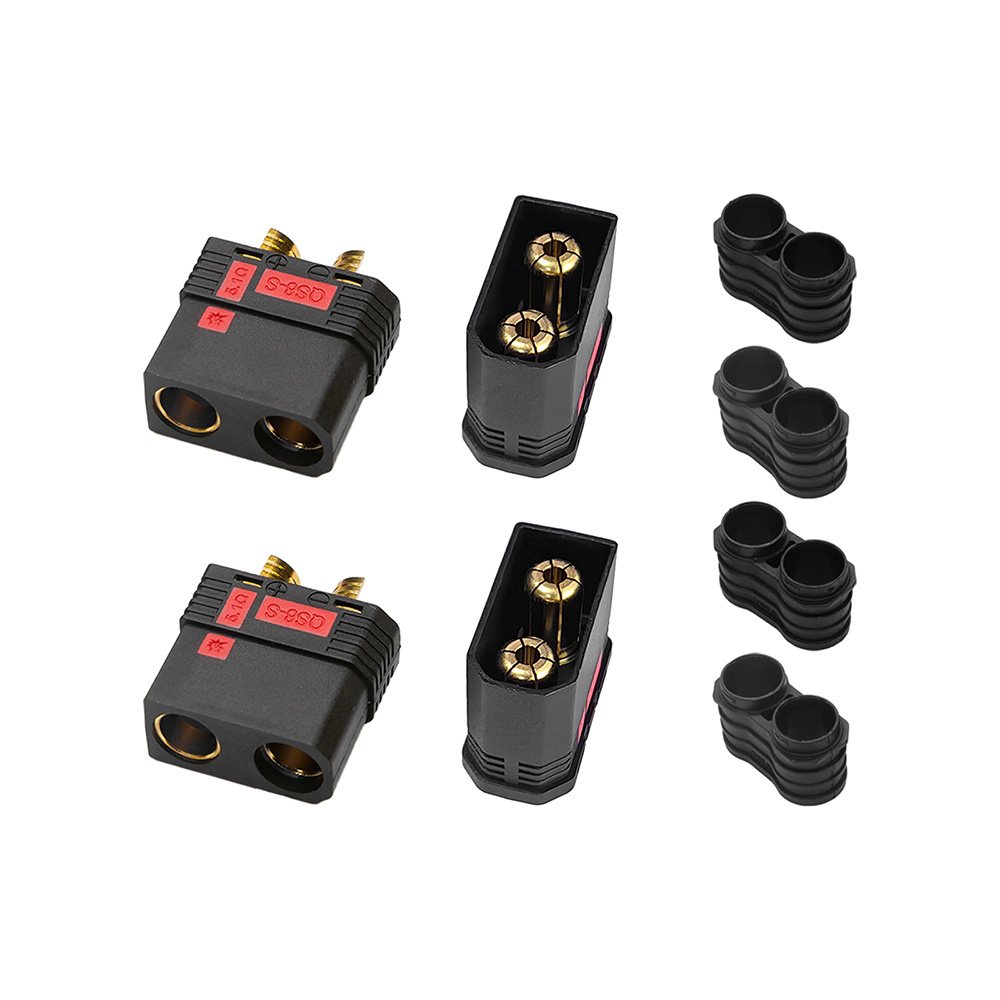
- YOUWEI optimizes overload safety threshold of QS Antispark connector through base material thickening, pre-charge arc suppression and overload tolerance customization:
- 3.1 Custom Thickened High-Conductivity Copper Alloy Terminals
- For high-overload-risk projects, we customize thickened oxygen-free copper terminal base, transient peak current tolerance threshold raised to 3x rated continuous current, resisting instantaneous startup and short-circuit overload impact without rapid melting.
3.2 Pre-charge Module Suppresses Overload Gap Arc
Even if overload deformation causes tiny contact separation gap, the built-in pre-charge resistor balances voltage difference between positive and negative poles, cutting off high-energy arc generation condition, avoiding secondary high-temperature arc burnout after overload deformation.
3.3 Custom Overload Temperature Alarm Signal Pin
Optional customized temperature sensing pin inside connector, feeds back internal temperature data to BMS in real time. Once overload temperature exceeds safety threshold, the system triggers power-off protection in advance to avoid complete burnout failure.
- 4. Overload Safety Threshold Comparison Test Data
- Test condition: Overload Impact Test (Instantaneous 3x rated current sustain 10s)
- Terminal deformation state Standard Thin-Terminal Connector: Partial melting & permanent distortion Custom Thick-Terminal QS Antispark Connector: Slight elastic deformation, fully recover after cooling
- Arc intensity during overload gap separation Standard Thin-Terminal Connector: Bright high-energy arc lasting 4–7s Custom Thick-Terminal QS Antispark Connector: No visible electric spark
- Internal peak temperature under overload Standard Thin-Terminal Connector: 189°C Custom Thick-Terminal QS Antispark Connector: 112°C
- Post-overload reusable rate Standard Thin-Terminal Connector: Zero, directly scrapped Custom Thick-Terminal QS Antispark Connector: 100% normal function after cooling
- 5. Projects with High Overload Risk Suitable for QS Customization
- Energy storage inverter power interfaces, heavy-load climbing AGVs, large battery pack parallel modules, fast DC charging piles, mining electric vehicle power connectors.
- 6. Conclusion & Inquiry Guide
- Overload burnout originates from low transient current tolerance and uncontrolled high-temperature electric arc. Custom thickened terminal QS Antispark connector improves overload safety threshold and eliminates overload induced arc, forming double protection against instantaneous current surge damage. Our technical team can customize terminal thickness and temperature monitoring function according to your equipment maximum instantaneous peak current parameters.
If you have any request please contact with my tech team https://www.youweic.com
Author:
YOUWEI TECHNOLOGIES(DONGGUAN) CO.LTD









Premium Cable Solutions
High-quality cables designed for superior performance and reliability across all your connectivity needs

Copyright © 2002-2026 YOUWEI TECHNOLOGIES(DONGGUAN) Ltd. All Rights Reserved.
Copyright © 2005-2015 YOUWEI TECHNOLOGIES(DONGGUAN) Ltd. All Rights Reserved.